As a philosophy undergraduate I studied The Problem of Evil. In a sense, from philosophy’s perspective, or theology’s, the problem is less ours and more God’s: how do we square the existence of evil with the existence of God, at least in the form we would want him to exist, omnipotent, omniscient, beneficent, the transcendant underwriter of right and wrong. If he is all of these things, then why is there evil in the world? You can halve the problem, by assuming some of the burden: we are, or are capable of, evil, known as moral evil, arising from the misuse of freewill. But that leaves natural evil, such as earthquakes, bubonic plague, etc, things that are not attributable to our agency, but to God, or the Universe as he structured it. The general thrust of The Problem of Evil in philosophy is either to pin God for the crime, or to let him off the hook, depending which side you’re on. Only secondarily is it about evil itself. I graduated, and left it at that. But then one day whilst I was browsing through the books at the Falkirk District libraries annual sale of decommissioned stock, I came across two that grabbed my attention: the Diary of Dawid Sierakowiak, and Into That Darkness, Gitta Sereny’s book based on her interviews with Franz Stangl, former camp commander of Treblinka.
First Dawid: he was a school boy of 15 when the Nazis declared war and invaded Poland. He noted the event in his diary. Academically gifted, morally grounded, always alert, he recorded daily life in the Lodz ghetto, dominated by hunger. The Ghetto was under the puppet administration of Chaim Rumkoswki, who pursued a policy of collaborating with the Nazis in their demands for deportation quotas, whilst trying to prove the utility of the remaining Jews in terms of productivity. It is difficult to assess how much Rumkowski knew, for example, about Auschwitz and the gas vans at Chelmno, the most likely destinations for those who left Lodz Ghetto by train. On September 4 1942, he was asked to fulfil a quota of 20,000 children. He negotiated: there were approximately 13,000 children under the age of 10 in the ghetto, if the Nazis could spare those ten and over, the remainder could be made up of the old, and the sick.
“A grievous blow has struck the ghetto. They are asking us to give up the best we possess — the children and the elderly. I never imagined I would be forced to deliver this sacrifice to the altar with my own hands. In my old age, I must stretch out my hands and beg. Brothers and sisters: Hand them over to me! Fathers and mothers: Give me your children! . . .
Chaim Rumkowski, September 4, 1942
Dawid’s mother was one of those who failed to meet the Nazi criteria for a right to life. His diary entry for sept 5, when teams of doctors, nurses, soldiers and civil servants visited the addresses of the elderly and the sick to make their assessment, offers a background snapshot of what hunger, hopelessness and constant exposure to degredating horror can do to a man, in this case Dawid’s father.
After the doctors announced the verdict, and when Mom, unfortunate Mom! was running like mad around the house, begging the doctors to spare her life, Father was eating soup that had been left on the stove by the relatives hiding in our apartment, and he was taking sugar out of their bag!
By the time I had finished Reading his Diary, I was fully aware that Dawid Sierakowiak, even at the age of 20, his age at death, was a better person than me. I was also left pondering what evil actually is. The devil can embody evil, in fact, is it’s personification. But can a man? What is a man’s relationship to evil, is it through his actions? How does this relate to the freedom (or otherwise) of his will, and his being situated within a group: the nation, the Volk, the administration, the organisation..
I read Gitta sereny’s book next, this time more alert and looking for clues. Into that Darkness is based on a series on interviews conducted with Franz Stangl in Dusseldorf prison, completed just 19 hours prior to his sudden death by heart failure. The book is utterly compelling in it’s close-up rendering of how the Final Solution was implemented. The most disturbing thing about it, though, is Stangl’s utter ordinariness and the apparent lack of answers as to why he did what he did. In what way is Franz Stangl different from us? The suspicion I had by the end of the book was that, maybe, he wasn’t.
I read two further books that proved illuminating on this point: Ordinary Men: Reserve Police Battalion 101 And The Final Solution In Poland, by Christopher Browning, and The Nazi Doctors: Medical Killing And The Psychology Of Genocide, by Robert Jay Lifton, Professor of Psychiatry and Psychology at the City University of New York.
Browning’s book is a history and study of a particular reserve battalion composed mostly of middle aged ordinary Germans from the city of Hamburg. The Battalion was sent to Poland in June 1942 in order to implement The Final Solution. They were a mobile killing unit that eventually accounted for 38,000 killed, and 45,200 deported to Treblinka. The core analysis of the book is based on the detailed testimony of 125 members of the battalion. Browning discusses a number of possible theories to explain why these ‘ordinary men’ were able to do what they did. One category of explanation focusses on personality as the ground of evil. Browning refers to work by Theodorno Ardono, who compiled the ‘F-scale’, F for fascist: a list of traits that are supposedly found embodied in authoritarian individuals.
• rigid adherence to conventional values
• submissiveness to authority figures
• aggressiveness towards out-groups
• opposition to introspection, creativity, reflection
• a tendency to superstition and stereotyping
• preoccupation with ‘toughness’
• ‘projection’
• an exaggerated concern with sexuality
Adorno, as the most prominent figure in the Frankfurt School of Social Theorists and Philosophers (Walter Benjamin was possibly it’s most brilliant though semi-detached member; of him, more later…) made great contributions to our understanding the consumerist society and the pressures it places on the individual. But the major criticism of the F-scales’ approach is it’s overemphasis on the individual as the root of evil. This approach requires that some form of selection process operates to place such individuals in positions where their potential for evil becomes active. But as Browning evidences in the very title of his book, the members of police battalion 101were ‘ordinary men’, middle aged reservists who were not profiled for the horrific task they were asked to undertake. Arguments around this historical instance can become complicated, especially when it is counter argued that a process of mass indoctrination took place in the German populace throughout the 1930’s. But Browning points up more controlled examples where a group specifically selected to screen out individuals with extreme psychological traits of any kind were asked to take part the now famous Stanford Prison experiment devised by Philip Zimbardo. Participants were split into two groups: prisoners and guards. Within 6 days in the guards’ group “sadistic behaviour could be elicited in individuals who were not ‘sadistic types'”. The experiment illustrated that the situation alone was a sufficient condition for eliciting aberrant behaviour. Man is indeed a social animal, and we swiftly internalize the (perceived) expectations of the group or institution to which we belong. In fact, as Robert Jay Lifton illustrates in his study of the medical profession under Nazism and it’s complicity in the Final Solution, evil is highly context dependent, and mediated by psychological mechanisms that allow a man to perform evil but still lay claim to prestige amongst his peers, and to mollify his conscience. The most extreme instance of this process is the Auschwitz Self: a self constructed to operate within the death camps, where involvement in extermination and death by exhaustive labour is rationalised within the context of an almost separate reality so extreme and divorced from the norm that acts performed there whilst at work are not to be taken as evaluative of the doer. You can clock off at the end of the day, hang up your White coat, cross back over the Abyss and return to your role as a family man. There are, of course, other mechanisms at work that can facilitate an individual to perform acts of evil, such as psychological numbing after repeated exposure to horror, and group bonding and standard setting (Browning records that some of the police reservists did not want to let their fellow battalion members down) but it is the concept of the Auschwitz Self that I find most compelling. Moral relativity is the 20th century’s heart of darkness, but it is the thick end of an extremely long wedge extending all the way back to the Ancient Greeks. In fact, you could argue that a certain functional relativism is inherent in the process of philosophical argumentation itself, as nothing is beyond questioning and the call to justify itself. Moral debates have swung back and forth between Consequentialist theories and Categorical theories ever since the Sophists set up their school in opposition to the Platonists. And after two millennia there’d still is no universally accepted definition of what is right and what’s wrong, nor, when we attempt to move beyond intuition or appeals to conscience , is there any agreement as to why a thing (act, omission to act, belief, etc) is right or wrong. Those exhausted by the debate may well succumb to scepticism. At best, they may agree that moral standards do in fact exist, and restrain their scepticism to the resignation that we can never directly access this truth. There is a goal, but no path. More radically, there is the conclusion that morality itself is a wholly human fabrication with no objective reality beyond that. Right and wrong then becomes a branch of psychology, or an expression of power politics or class warfare. A surface phenomenon to be studied as an expression of underlying drives and forces. If morality is simply conventional, then it is logical to imagine a society where acts we deem evil are construed either as good or morally neutral, in the way that, if we could all agree on it, the word apple could be replaced with a different sign to designate that particular object. Apples, of course, are designated by different signs in other languages. The problem of evil becomes a much smaller but more urgent problem of why certain individuals and groups disagree in their formulation of what is right and what is wrong, or why they commit evil even if they accept the conventional definitions. Which is the level at which we have been considering it. I suspect that most of us have been haunted by this possibility and it’s implications, at some point in our lives. A lot of modern European literature is an attempt to deal with this potential nihilism. Raskolnikov, for example, in Dostoyevsky’s novel Crime and Punishment, draws from it the conclusion that everything is permitted, including murder, and proceeds to test this theorem by killing an old woman money lender whose right to life, in his eyes, had become relativized. This crossing over from the philosophical to the practical and murderous has terrible consequences for Raskolnikov, and I suspect that most moral nihilists would likewise be unable to sustain the consequences of their doctrine in practise without degradation to their humanity. In practical terms, most of us behave ‘as if’, (George Steiner’s advice to artists who want to create with a view to perfection or to embody meaning). We act ‘as if’ right and wrong are absolutes, as if God is our judge. It is this default position that raises the Problem of Evil to philosophical heights that transcend psychological, organisational and sociological treatments of the issue. But it is the work of Browning and Lifton, for example, amongst others, that is crucial in the attempt to forestall evil.
Posts Tagged ‘Lodz’
Evil
Posted by Eckhart's Dog Woof! Woof! on January 23, 2011
Posted in Uncategorized | Tagged: Christopher Browning, evil, ghetto, Gitta Sereny, Lodz, Problem of Evil, Robert Jay Lifton | Leave a Comment »
From the Diary of Dawid Sierakowiak
Posted by Eckhart's Dog Woof! Woof! on April 16, 2010
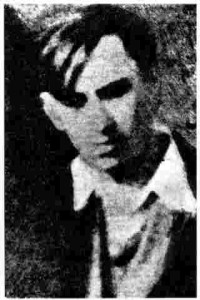
April 16, 1941. Lodz. On Wednesday an announcement was posted for the voluntary registration of men, eighteen to forty five, and women, twenty to thirty, for labour in Germany. On Saturday, all those who ever registered for labour but have not yet left began receiving notifications to report immediately for departure. Several thousand persons have left. They are probably lucky buggers with better chances of surviving the war than we in the ghetto. All the letters that arrive from those sent out for labour assure us about satiety there (“We can eat, eat, and eat again”), something that’s no longer experienced in the ghetto.
Footnote: The Nazis regularly claimed that deportations from the ghetto were to provide labour for camps in Germany and elsewhere. In most cases, the actual destination was Chelmno, in Poland’s Kolo County, where the deportees from Lodz were held in a small church in town, and then driven in vans that asphyxiated them on the way to a field in a nearby forest where the bodies were dumped and burned. The Nazis sought to avoid future resistance by compelling some deportees to write fictitious letters and postcards back to the ghetto before putting the Jews to death – a fate that many by then had realised they would be facing, if only by reading the words that others had scratched into the woodwork and altar of the church.
(from Five Notebooks from the Lodz Ghetto, editted by Alan Adelson, translated by Kamil Turowski. Bloomsbury 1996)
I read Dawid Sierakowiaks diary regularly, and I’ll post something more extensive on his story later. But the reason I pasted today’s entry for 1941 is, two nights ago my ten year old asked me two questions: how do you split an atom? And, what is evil? It’s an interesting conjunction of questions out of which you could probably spin a dissertation on the status of, and belief in, reason, as an objective force in the world to which we should ally ourselves in the defence against evil. When I was my son’s age I had an uncritical assumption that evil is something radical and an entity in itself. But reading certain studies of those involved in perpetatrating evil has changed that opinion: Hannah Arendt’s study of Eichman, Robert Browning’s study of Reserve Police Battalion 101, and Gitta Sereny’s interviews with the former camp Kommandant of Treblinka, Franz Stangl. None of these evildoers were out of the ordinary. So the issue of how to explain the nature of evil is more complex and embedded in the misuse of one’s faculties of critical reflection and what an Existentialist might call Bad Faith, acts of ommision where one is in a position to act positively in a direction demanded by what it is right to do. I need to find a way not simply of explaining this to him, but also of illustrating the disturbing tendency of man to act as a herd animal who perceives truth as something decided by majority decision. According to Robert Browning, less than 10% of the middle aged police reservists who were sent to Poland to execute Jews in the wake of the Army’s push towards Russia opted out of commiting mass murder, even though there was little threat of punishment if they did choose to opt out. Awww, bless them: they just wanted to belong…
Posted in Uncategorized | Tagged: evil, ghetto, holocaust, Lodz | Leave a Comment »
 FruitFly