FruitFly

A Blog about Poetry, Bikes, and Video Games.

Archive for the ‘Uncategorized’ Category

Walter Benjamin (maybe)

Posted by Eckhart's Dog Woof! Woof! on March 4, 2018

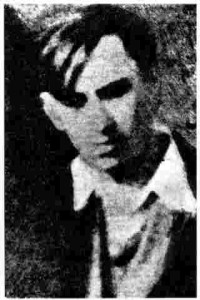
I watched a documentary on Walter Benjamin two nights ago. Last night, I watched another documentary, on the scientific investigation of the possible explanations of our sense of morality. And at 2.58 am this morning (according to the time on my phone) I found myself laying awake in bed, restless with lower back pain, wondering about the distance we’ve travelled from the image of a bespectacled Benjamin, pen in hand above a manuscript (last of the Kabbalists..?), to that of a scientist in a white coat holding up a vacutainer of blood and saying that the origin of our sense of right and wrong has a neurochemical foundation, specifically in Oxytocin. Somewhere along the timeline between those two images the 20th Century clicked shut and receded into history, taking with it a variety of assumption, views, and outlooks which have long nurtured me. I’ve wanted to talk about Benjamin for a while. It is of course a notoriously difficult thing to do and my knowledge of his work is inconsistent and in no way original in it’s interpretation. In fact, I have no working interpretation of Benjamin. I first encountered, not his name, but his two initials, W.B., in the title of a poem by Bertolt Brecht in a volume of Brecht’s poetry given to me by a friend, Karen Crossan, on my sixteenth birthday. Here it is:

On The Suicide of the Refugee W.B.

I’m told you raised your hand against yourself
Anticipating the butcher.
After eight years in exile, observing the rise of the enemy
Then at last, brought up against an impassable frontier
You passed, they say, a passable one.

Empires collapse. Gang leaders
Are strutting about like statesmen. The peoples
Can no longer be seen under all those armaments.

So the future lies in darkness and the forces of right
Are weak. All this was plain to you
When you destroyed a torturable body.

Now, there is a lot to be said about this poem, but I’m not going to go over it in any great depth: it’s pretty much staring you in the face. I am simply glad that I have so far never been put in a position where the choice made in the final sentence seems like the only one left. It is of course a choice that many with severe mental illness or a physical terminal illness find themselves having to make. But what gripped me most within this poem was the defeated future that confronted the man who made the final choice. He died with no knowledge that what he believed in would not also die. This troubled me. For years. And when I eventually found out who WB was, and learned more about him, it troubled me even more. I first read him directly in his essays on Kafka. Which is a good place to start. It is probably where he was most at home, unhoused, pondering the work of a fellow European assimilated Jew who was also a late Kabbalist engaged in a search for the sources of meaning. (How conscientiously Kabbalistic were both Kafka and Benjamin? I don’t know in particulars, though Kafka was acquainted with Jewish mystical literature and one of Benjamin’s most enduring friendships was with Gershom Scholem, the scholar largely responsible for pioneering the systematic academic study of Kabbalah, and who was later the first professor of Jewish Mysticism at the Hebrew University in Jerusalem.) The hermeneutic procedures of both Benjamin and Kafka are inescapably influenced by a culture that spent two millennia and more wrestling with exile and alienation. Kabbalah explains creation as a process of tsimtsum, the self contraction of God in order to make room for Creation. However, creation is not thereby generated within a nihilistic vacuum. What is left after the necessary absence of God is His Shekinah, or Glory, an echo of his former immanence. And this constitutes a form of exile, both of creation and of elements of the divine from itself. (A template almost, for subsequent experience of exile, though in real historical time Kabbalah is backwards formulated after…, after the destruction of the Temple, after the eviction from Jerusalem, after the the bureaucracy of the Pale…) It is the work of the Kabbalist to reconcile God with His Shekinah, to bring Creation back to God in a process of redemption. To do this the Kabbalist must break open the mundane to release the divine sparks of God’s Shekinah contained therein, he must shatter the Qelipot to release His glory. Crucially, to embark on this project is to seek to engage with fragments in a gradual reconstruction of the whole. And this theme, along with that of meaning exiled from its source, are what can be detected in both Kafka and in Benjamin, and in Benjamin on Kafka. Kafka famously wrote in his Diary: there is a goal, but no path. And also that there is hope, but none for us… Both the parable of Before the Law and his short story The Great wall of China attest to a source, and the absurdity of seeking contact with it. Because our lives are not lived contiguous with this source of meaning, there is an inherent imbalance between what we intend in this world and what are actions actually effect. Our actions have consequences far beyond what we have willed, and are open to interpretations that are impossible to end stop. Consequently, we are all potentially Infinitely guilty no matter how small we are. One can only interpret, furiously, constantly, in an attempt to minimise the gap between will and act, intention and consequence, to ameliorate the guilt. But is rationality enough? One senses it is not. And in Kafka particularly one senses that it is first and foremost a symptom, and only secondarily an imperfect cure. Similarly, Benjamin had a conception of language as being the fragmented remnants of an original language, an Ursprach, towards which the provisional languages of man indicate as a distant source of meaning, the way iron filings will orient in a pattern when exposed to a magnetic field. Careful reconstruction of the fragments, their cryptographic arrangement, can bring us closer to a day of comprehension, to contact with a truth both underlying and transcendent. What snagged my interest as I considered the two documentaries was the difference between what the scientist was seeking to do, and what Benjamin, and before him, Kafka, was searching for. The scientist was seeking an explanation. Benjamin was engaged in a search for meaning. There is a difference between these two things. Or is there? To proceed carefully: the first is reductive, and part of an infinite regressive chain. The other is somehow ultimately outside the order of contingent things that indicate and explain each other. The point is perhaps made clearer by analogy with the Argument from Contingency, one of Thomas Aquinas’ ‘five ways’ to demonstrate the existence of God from the starting point of the evidence of creation itself. This way differs from his similar Argument from Causation in a crucial aspect: while the argument from causation attempts to convince the reader of an ultimate first cause to explain the chain, the argument from contingency treats contingent beings as a set which in itself requires something external to it as a whole to explain its existence. Rather than arguing backwards within a chain as with causation, an explanation for the chain in its entirety is sought. The argument depends on our not identifying causation with contingency (and what divides them here is…time). The subtlety of this distinction was grasped by Liebniz, when he formulated his own version of a Cosmological Argument, which he summarised as the question ‘Why is there something rather than nothing?’ Causal explanations mapped out within the set are not sufficient to explain the contingency of the set itself, as a whole. (And for this reason, it has been argued that Liebniz’ question is not a scientific one, or one that answerable within the realm of natural causes where science busies itself.) What is here sought is perhaps not an ultimate first cause, which is a temporal explanation insofar as it refers to a sequence, but something that ‘cradles’ everything in its entirety, including time, which is itself part of the created order. Most theologians would agree that God exists outside of time (and for two in particular, Saint Augustine and Meister Eckhart, the relation of God and Eternity, or God’s Eternity, to time and creation, are issues of fundamental wonder) and the Argument from Contingency is one that accounts for this and is so distinguished from the Argument from Causation. The difference entails a matter of perspective, one that was well summed up by Czeslaw Milosz in a poem he wrote in memory of a friend, deceased.

To Jozef Czechowicz

It is possible that the dead do not need reports from the earth, and see in one symbol all that occurred later.

This echoes a famous passage by Julian of Norwich

He shewed me a little thing, the quantity of an hazel-nut, in the palm of my hand; and it was as round as a ball. I looked thereupon with eye of my understanding, and thought: What may this be? And it was answered generally thus: It is all that is made.

This is the viewpoint from eternity.
Posted in Uncategorized | Tagged: , , , , , , , | Leave a Comment »

Dan Pagis

Posted by Eckhart's Dog Woof! Woof! on March 5, 2011

Dan Pagis was born in Bukovina, Romania, in 1930. The same region where Paul Celan came from. Like Celan, Pagis also was interred for a while in a concentration camp, from which he escaped in 1944. He eventually made his way to Israel in 1946. He learned Hebrew, and chose to write his poetry in that language. I am not as familiar with his poetry as with the poetry of his more famous contemporary Yehuda Amichai, who also wrote in Hebrew. The poems I have read seems to be more preoccupied with the Holocaust than Amichai’s work which is more identified with the birth of a nation and it’s struggle with history as it attempts to deal with the present and look to the future. As a legacy of the Holocaust, Pagis was left with a sense of the threatening  moral vacancy at the heart of existence. This world is not a moral economy, it is a physical one. At the heart of things lies no Platonic governance, or set of ultimate moral standards that exert retribution for wrongs perpetrated by evildoers. And evildoers like the Nazis count on this. They are biological reductionists. Eugenicists look to the species, and devalue the individual, whose worth is judged only insofar as they concur with the idealised template of the species. Rights accrue on a genetic basis, and to that extent are genetically determined. And thus Nazis are, in their own eyes, justified in what they do. What the horrified witness to their acts is left to deal with, however, is a challenge to their own worldview and traditionally held assumptions when just deserts are not meted out accordingly and the evildoers go about their business unimpeded. If not outright divine intervention, then surely… something…should have happened. And why does the sun still shine? The world is suddenly a changed place. Pagis explores this unmasking, in the form of an experiment, the historical analogue of which does not require comment. The final horror revealed in this poem is the biological reductionism to a simple overriding instinct to survive that serves to isolate each and every one of us. What evidence is there, that in those final moments after the door was sealed shut, those who were about to die could find within themselves the strength to show compassion and to comfort each other? Little or none, because there were no survivors to tell of it. [The enormity of the crime is thereby made worse]. What this poem hints at is this final monstrosity. And the evidence lies in the experiment, if your perspective and worldview is confined to the laboratory. Part of the burden of bearing witness is to document contrary evidence, to resist reductionist ideologies and their inferences. Pagis, of course, does this as part of the urgency of his work overall.

In The Laboratory

The data in the glass jar: some ten scorpions
of various species, a community
lazy, adjustable, moved by feelings of equality,
each treading, each trodden upon.
Now the experiment:
an inquisitive, private providence blows
poisonous fumes.
At once,
each is alone in the world,
erect on his tail, begging one moment more
from the glass wall.
The sting is superfluous now,
the pincers do not understand.
The dry straw body stiffens
against the last judgement.
Distant in the dust, the angels of doom
are terrified.
But it’ s only an experiment, an experiment,
not a verdict
of poison for poison.

Posted in Uncategorized | Tagged: , , , , | Leave a Comment »

Pseudo-philosophical Ramblings, 1

Posted by Eckhart's Dog Woof! Woof! on February 19, 2011

I heard this moral thought-experiment delivered as part of a lecture given on Channel 4 recently by a Yale professor of Moral and Political philosophy. I post it here partly out of nostalgia, because it made me chuckle in remembrance of my undergraduate days when I studied philosophy and struggled with similar moral problems. When attempting to derive general moral principles from a consideration of such thought experiments it quickly becomes clear that we often default to an intuitionist viewpoint that treats morality as a form of perception. It is very difficult to argue someone away from a position that they intuit as morally correct, even when they are unable to rationally delineate their position in the face of contrary evidence or consequences that verge on the unacceptable. Anyway, the thought experiment is this: seven road traffic accident victims are brought into A&E. Six of them are moderately injured, but not in imminent danger, while the seventh is at death’s door and requires immediate medical attention. Due to restraints in manpower and material, if you triage the seventh as priority, by the time you have treated him or her the other six will have died. Because of their lesser injuries overall, with the same manpower and materials, the six could be successfully treated, but in the interim, the seventh will have died. Who do you treat? And why? If you treat the Seventh, the other six will die, and most people I suspect would feel uncomfortable with this consequence. However, would you be comfortable with effectively sacrificing the Seventh to treat the Six? How would you rationalise the choice? Utilitarians would be able to justify this position, on the basis that the consequences of an act are the measure of it’s moral rightness or wrongness. However, people who hold categorical positions, such as thou shall not kill, might find themselves prohibited from such a trade off insofar as they would be unable to get past the Seventh, or to defer treatment. Such deferment would constitute an act of omission. If you commit yourself to an act of omission on this occasion, does that make you a consequentialist, a utilitarian? Thou shall not kill, unless….it is to save 6 other people at a later date? Another interesting thought-experiment the Professor outlined was this one: a man is in hospital dying of multi-organ failure. He needs a new heart, a new liver, new kidneys, a spleen…In a room next door, a young RTA victim has just expired, and he is signed up to the organ donation scheme. A solution to this medical situation is clear. But now consider this twist: the RTA victim is not yet dead, but dying. Only, not quickly enough. There is no hope for survival, but if he doesn’t die quick, quicker, it will be too late to help the patient with multi-organ failure. What do you do? Very few people would do anything other than nothing. Categorical imperatives would prevent most from speeding up the RTA victim’s demise in order to assist the patient in need of the organs. But the result is, both die. From a consequentialist viewpoint, is this acceptable? It does appear to be the worse case scenario. Without wanting to argue for either position, because that is not the reason I started this post, I would like point out that there is a branch of categorical morality that that is in a sense Platonic: it asserts that an act, for example, is right or wrong according to an objective reality, a moral reality that you are either in accord with, or in contravention of. Moral laws exist in the way that the laws of physics exist for many scientists, or mathematical entities for many mathematicians: they are there to be discovered. Although this is a deeply traditional view, and one perhaps that most of us hold as a working attitude, it has been throughout the 20th Century unpopular amongst many schools of critical thought. Moral realism in the old school Platonic sense has given way to theories of emergent meaning which describe morality as evolving upwards from below, so to speak. In Marxist theory, for example, the prevailing morality of a society is dictated by underlying structures of an economic nature. And more recently, we have attempts to account for moral attitudes and beliefs from an evolutionary standpoint. This is part of a wider reversal of meaning from the old Logocentric view which held that meaning proceeds from a transcendent source, or is underwritten by a source out with the world, to the view that meaning is created from below and within the system or world we inhabit. The simplest example of this reversal is the contrast between the old ‘Adamic’ theory of language, so called because the belief is that a word, like Apple, has meaning because it encodes the essence of the object it refers to, and theories of language that view words as arbitrary signs whose meanings are dictated by convention. The word apple means what it does because we who use this word assign it to that object. We could, of courses, assign another, and this is what in fact other languages do. In the Bible, this ‘fallen’ view of language is expressed by the Tower of Babel story: a confusion of tongues disconnected from a transcendent source, each tongue now randomly assigning it’s own words to things. Where issues of morality and meaning become really interesting is in consideration of the implications thrown up by mathematics and the laws of physics. As I mentioned earlier, many, if not most, mathematicians and theoretical physicists, would regard themselves as functionally Platonic, in the sense that they experience a strong sensation of discovery in their breakthrough work. Discovery, in contrast to invention or fabrication. Whether or not this is a neurological feature, one part of the brain discovering the output of another part, maybe…nevertheless many mathematicians and physicists speak of perception when it comes to either seeing a solution to a problem, or uncovering a law. The ontological status of mathematics and the laws of physics is fascinating and rich in implication for theories of meaning and strong versions of theories of moral realism which hold that moral laws exist as objective entities which we perceive, sometimes as through a glass, darkly, when engaged in assessing whether an act or action is right or wrong. That the universe possesses structure and beauty, and that these features can be expressed mathematically and formulated as laws with great predictive power, is exceedingly strange. It is certainly a stumbling block to those who insist that reality is brute and simply ‘there’, and that all of our investigations of it and so-called knowledge are merely nets thrown over the top of an inherently meaningless void.

Posted in Uncategorized | Tagged: , , , , | Leave a Comment »

Aeschylus

Posted by Eckhart's Dog Woof! Woof! on February 12, 2011

Pome of the day: a passage from Aeschylus. I was employed by a charitable organisation, Belfast Housing Aid, during 1988/89. The staff there were remarkably supportive and kind during a time in my life when I was frequently itinerant and once or twice outright homeless. I eventually made the decision to return to Scotland, as my family are here, and as part of my farewell the staff had collection for me: I bought a number of things with the money, including a good pen, but most importantly two books: the Theban plays by Sophocles (Antigone, Oedipus the King, Oedipus at Colonus) and the Oresteia, by Aeschylus. The Orestieia is the only surviving tragic trilogy from Ancient Greece, and would have been performed over the course of one day, commencing at dawn, along with a missing satyr play that would have provided retrospective light relief from the preceding horror. It would have originally been performed at the festival of Dionysus in Athens. Three dramatists would stage their work, each allotted one day. Afterwards a victor would be decided. The Oresteia won Aeschylus first prize at the festival in 458 BCE. The story so far: Agememnon has returned victorious from the Trojan Wars. He has brought down Troy. As spoils, he brings home Cassandra, daughter of Priam, king of Troy. But Cassandra is no ordinary beauty, she is a priestess to the god Apollo. And in this passage she has a vision of Agamemnon’s death. He is to die at the hands of his wife, outraged that she has waited 10 years for his homecoming from the Siege of Troy, only to see him return with Cassandra as a prize. But even deeper than this outrage, is the thirst for revenge that has eaten away within her all this time, for her murdered daughter Iphigenia, whom Agamemnon had sacrificed at the outset of the fleet’s departure for Ilium. A seer had told Agamemnon to sacrifice his daughter to propitiate the Gods, and ensure success in the enterprise. But now he is back home, Clytaemnestra has awaited with a patient fury for ten long years, and in this passage Cassandra sees the coming act of revenge. The gift of prophecy is imposed against Cassandra’s will, it is an act of violation, and it’s hammering insistence galvanises the old men gathered around her to form a Chorus, which acts as amplifier to the prophecy. Free will and individuality are subsumed in the sweep of Fate. The translation is by Robert Fagles.

Cassandra:

Oh no, what horror, what new plot, new agony this?

It’s growing, massing, deep in the house,

A plot, a monstrous…thing

To crush the loved ones, no,

There is no cure and rescue’s far away and…


Leader:

I can’t read these signs; I knew the first,

The city rings with them.


Cassandra:

You, you godforsaken – you’d do this?

The lord of your bed,

You bathe him… his body glistens, then,

How to tell the climax?

Comes so quickly, see,

Hand over hand shoots out, hauling ropes – then lunge!


Leader:

Still lost. Her riddles, her dark words of god –

I’m groping, helpless.


Cassandra:

No no, look there!

What’s that? Some net flung out of hell –

No, she is the snare,

The bedmate, deathmate, murder’s strong right arm!

Let the insatiate discord in the race

Rear up and shriek ‘Avenge the victim – stone them dead!’


Leader:

What fury is this? Why rouse it, lifting its wailing

Through the house? I hear you and lose hope.


Chorus:

Drop by drop at the heart, the gold of life ebbs out.

We are the old soldiers…wounds will come

With the crushing sunset of our lives.

Death is close, and quick.


Cassandra:

I was ashamed to tell this once,

But now…


Leader:

We spoil ourselves with scruples,

Long as things go well.

Cassandra:

He came like a wrestler,

Magnificent, took me down and breathed his fire

Through me and –


Leader:

You bore him a child?


Cassandra:

I yielded,

Then at the climax I recoiled – I deceived Apollo!


Leader:

But the god’s skills – they seized you even then?


Cassandra:

Even then I told my people all the grief to come.


Leader:

And Apollo’s anger never touched you? Is it possible?


Cassandra:

Once I had betrayed him I could never be believed.


Leader:

We believe you, your visions seem so true.


Cassandra:

Aieeeeee!

The pain, the terror! The birth pangs of the seer

Who tells the truth –

it whirls me, oh

The storm comes again, the crashing chords!

Look, you see them nestling at the threshold?

Young, young in the darkness like a dream,

Like children really, yes, and their loved ones

Brought them down…

Their hands, they fill their hands

with their own flesh, they are serving it like food,

Holding out their entrails…now it’s clear,

I can see the armfuls of compassion, see the father

Reach to taste and –

For so much suffering

I tell you, someone plots revenge.


Leader:

Thyestes feast,

The children’s flesh – that I know,

And the fear shudders through me. It’s true,

Real, no dark signs about it. I hear the rest

But it throws me off the scent.


Cassandra:

Agamemnon.

You will see him dead.


Chorus:

But the lust for power never dies –

Men cannot have enough.

No one will lift a hand to send it

from his door, to give it warning,

‘Power, never come again!’

Take this man: the gods in glory

gave him Prism’s city to plunder,

brought him home in splendour like a god.

But now if he must pay for the blood

his father’s shed, and die for the deaths

he brought to pass, and bring more death

to avenge his dying, show us one

who boasts himself born free

of the raging angel…

The reference to Thyestes feast recounts an event at the root of Agamemnon’s ruling house: Thyestes had a brother, Atreus, and both had a claim to the throne. Atreus dealt with the contest by first banishing Thyestes, and then inviting him back to attend a feast. Unwittingly, what Thyestes feasted on was his own children, which from Atreus’ point of view took care of Thyestes lineage. Thyestes cursed Atreus, and the curse travelled down the bloodline, ultimately to the doom of Agamemnon. Apparently, this Greek idea of an hereditary curse destroying a house through the generations was one Coppola used when filming the Godfather and it’s sequels. The ultimate goal of the Oresteia, however, is the extinguishing of the hereditary curse and t Read the rest of this entry »

Posted in Uncategorized | Tagged: , | Leave a Comment »

Evil

Posted by Eckhart's Dog Woof! Woof! on January 23, 2011

As a philosophy undergraduate I studied The Problem of Evil. In a sense, from philosophy’s perspective, or theology’s, the problem is less ours and more God’s: how do we square the existence of evil with the existence of God, at least in the form we would want him to exist, omnipotent, omniscient, beneficent, the transcendant underwriter of right and wrong. If he is all of these things, then why is there evil in the world? You can halve the problem, by assuming some of the burden: we are, or are capable of, evil, known as moral evil, arising from the misuse of freewill. But that leaves natural evil, such as earthquakes, bubonic plague, etc, things that are not attributable to our agency, but to God, or the Universe as he structured it. The general thrust of The Problem of Evil in philosophy is either to pin God for the crime, or to let him off the hook, depending which side you’re on. Only secondarily is it about evil itself. I graduated, and left it at that. But then one day whilst I was browsing through the books at the Falkirk District libraries annual sale of decommissioned stock, I came across two that grabbed my attention: the Diary of Dawid Sierakowiak, and Into That Darkness, Gitta Sereny’s book based on her interviews with Franz Stangl, former camp commander of Treblinka.
First Dawid: he was a school boy of 15 when the Nazis declared war and invaded Poland. He noted the event in his diary. Academically gifted, morally grounded, always alert, he recorded daily life in the Lodz ghetto, dominated by hunger. The Ghetto was under the puppet administration of Chaim Rumkoswki, who pursued a policy of collaborating with the Nazis in their demands for deportation quotas, whilst trying to prove the utility of the remaining Jews in terms of productivity. It is difficult to assess how much Rumkowski knew, for example, about Auschwitz and the gas vans at Chelmno, the most likely destinations for those who left Lodz Ghetto by train. On September 4 1942, he was asked to fulfil a quota of 20,000 children. He negotiated: there were approximately 13,000 children under the age of 10 in the ghetto, if the Nazis could spare those ten and over, the remainder could be made up of the old, and the sick.
“A grievous blow has struck the ghetto. They are asking us to give up the best we possess — the children and the elderly. I never imagined I would be forced to deliver this sacrifice to the altar with my own hands. In my old age, I must stretch out my hands and beg. Brothers and sisters: Hand them over to me! Fathers and mothers: Give me your children! . . .
Chaim Rumkowski, September 4, 1942
Dawid’s mother was one of those who failed to meet the Nazi criteria for a right to life. His diary entry for sept 5, when teams of doctors, nurses, soldiers and civil servants visited the addresses of the elderly and the sick to make their assessment, offers a background snapshot of what hunger, hopelessness and constant exposure to degredating horror can do to a man, in this case Dawid’s father.
After the doctors announced the verdict, and when Mom, unfortunate Mom! was running like mad around the house, begging the doctors to spare her life, Father was eating soup that had been left on the stove by the relatives hiding in our apartment, and he was taking sugar out of their bag!
By the time I had finished Reading his Diary, I was fully aware that Dawid Sierakowiak, even at the age of 20, his age at death, was a better person than me. I was also left pondering what evil actually is. The devil can embody evil, in fact, is it’s personification. But can a man? What is a man’s relationship to evil, is it through his actions? How does this relate to the freedom (or otherwise) of his will, and his being situated within a group: the nation, the Volk, the administration, the organisation..
I read Gitta sereny’s book next, this time more alert and looking for clues. Into that Darkness is based on a series on interviews conducted with Franz Stangl in Dusseldorf prison, completed just 19 hours prior to his sudden death by heart failure. The book is utterly compelling in it’s close-up rendering of how the Final Solution was implemented. The most disturbing thing about it, though, is Stangl’s utter ordinariness and the apparent lack of answers as to why he did what he did. In what way is Franz Stangl different from us? The suspicion I had by the end of the book was that, maybe, he wasn’t.
I read two further books that proved illuminating on this point: Ordinary Men: Reserve Police Battalion 101 And The Final Solution In Poland, by Christopher Browning, and The Nazi Doctors: Medical Killing And The Psychology Of Genocide, by Robert Jay Lifton, Professor of Psychiatry and Psychology at the City University of New York.
Browning’s book is a history and study of a particular reserve battalion composed mostly of middle aged ordinary Germans from the city of Hamburg. The Battalion was sent to Poland in June 1942 in order to implement The Final Solution. They were a mobile killing unit that eventually accounted for 38,000 killed, and 45,200 deported to Treblinka. The core analysis of the book is based on the detailed testimony of 125 members of the battalion. Browning discusses a number of possible theories to explain why these ‘ordinary men’ were able to do what they did. One category of explanation focusses on personality as the ground of evil. Browning refers to work by Theodorno Ardono, who compiled the ‘F-scale’, F for fascist: a list of traits that are supposedly found embodied in authoritarian individuals.
• rigid adherence to conventional values
• submissiveness to authority figures
• aggressiveness towards out-groups
• opposition to introspection, creativity, reflection
• a tendency to superstition and stereotyping
• preoccupation with ‘toughness’
• ‘projection’
• an exaggerated concern with sexuality
Adorno, as the most prominent figure in the Frankfurt School of Social Theorists and Philosophers (Walter Benjamin was possibly it’s most brilliant though semi-detached member; of him, more later…) made great contributions to our understanding the consumerist society and the pressures it places on the individual. But the major criticism of the F-scales’ approach is it’s overemphasis on the individual as the root of evil. This approach requires that some form of selection process operates to place such individuals in positions where their potential for evil becomes active. But as Browning evidences in the very title of his book, the members of police battalion 101were ‘ordinary men’, middle aged reservists who were not profiled for the horrific task they were asked to undertake. Arguments around this historical instance can become complicated, especially when it is counter argued that a process of mass indoctrination took place in the German populace throughout the 1930’s. But Browning points up more controlled examples where a group specifically selected to screen out individuals with extreme psychological traits of any kind were asked to take part the now famous Stanford Prison experiment devised by Philip Zimbardo. Participants were split into two groups: prisoners and guards. Within 6 days in the guards’ group “sadistic behaviour could be elicited in individuals who were not ‘sadistic types'”. The experiment illustrated that the situation alone was a sufficient condition for eliciting aberrant behaviour. Man is indeed a social animal, and we swiftly internalize the (perceived) expectations of the group or institution to which we belong. In fact, as Robert Jay Lifton illustrates in his study of the medical profession under Nazism and it’s complicity in the Final Solution, evil is highly context dependent, and mediated by psychological mechanisms that allow a man to perform evil but still lay claim to prestige amongst his peers, and to mollify his conscience. The most extreme instance of this process is the Auschwitz Self: a self constructed to operate within the death camps, where involvement in extermination and death by exhaustive labour is rationalised within the context of an almost separate reality so extreme and divorced from the norm that acts performed there whilst at work are not to be taken as evaluative of the doer. You can clock off at the end of the day, hang up your White coat, cross back over the Abyss and return to your role as a family man. There are, of course, other mechanisms at work that can facilitate an individual to perform acts of evil, such as psychological numbing after repeated exposure to horror, and group bonding and standard setting (Browning records that some of the police reservists did not want to let their fellow battalion members down) but it is the concept of the Auschwitz Self that I find most compelling. Moral relativity is the 20th century’s heart of darkness, but it is the thick end of an extremely long wedge extending all the way back to the Ancient Greeks. In fact, you could argue that a certain functional relativism is inherent in the process of philosophical argumentation itself, as nothing is beyond questioning and the call to justify itself. Moral debates have swung back and forth between Consequentialist theories and Categorical theories ever since the Sophists set up their school in opposition to the Platonists. And after two millennia there’d still is no universally accepted definition of what is right and what’s wrong, nor, when we attempt to move beyond intuition or appeals to conscience , is there any agreement as to why a thing (act, omission to act, belief, etc) is right or wrong. Those exhausted by the debate may well succumb to scepticism. At best, they may agree that moral standards do in fact exist, and restrain their scepticism to the resignation that we can never directly access this truth. There is a goal, but no path. More radically, there is the conclusion that morality itself is a wholly human fabrication with no objective reality beyond that. Right and wrong then becomes a branch of psychology, or an expression of power politics or class warfare. A surface phenomenon to be studied as an expression of underlying drives and forces. If morality is simply conventional, then it is logical to imagine a society where acts we deem evil are construed either as good or morally neutral, in the way that, if we could all agree on it, the word apple could be replaced with a different sign to designate that particular object. Apples, of course, are designated by different signs in other languages. The problem of evil becomes a much smaller but more urgent problem of why certain individuals and groups disagree in their formulation of what is right and what is wrong, or why they commit evil even if they accept the conventional definitions. Which is the level at which we have been considering it. I suspect that most of us have been haunted by this possibility and it’s implications, at some point in our lives. A lot of modern European literature is an attempt to deal with this potential nihilism. Raskolnikov, for example, in Dostoyevsky’s novel Crime and Punishment, draws from it the conclusion that everything is permitted, including murder, and proceeds to test this theorem by killing an old woman money lender whose right to life, in his eyes, had become relativized. This crossing over from the philosophical to the practical and murderous has terrible consequences for Raskolnikov, and I suspect that most moral nihilists would likewise be unable to sustain the consequences of their doctrine in practise without degradation to their humanity. In practical terms, most of us behave ‘as if’, (George Steiner’s advice to artists who want to create with a view to perfection or to embody meaning). We act ‘as if’ right and wrong are absolutes, as if God is our judge. It is this default position that raises the Problem of Evil to philosophical heights that transcend psychological, organisational and sociological treatments of the issue. But it is the work of Browning and Lifton, for example, amongst others, that is crucial in the attempt to forestall evil.

Posted in Uncategorized | Tagged: , , , , , , | Leave a Comment »

From the Diary of Dawid Sierakowiak

Posted by Eckhart's Dog Woof! Woof! on April 16, 2010

dawid_sierakowiak-200x300

April 16, 1941. Lodz. On Wednesday an announcement was posted for the voluntary registration of men, eighteen to forty five, and women, twenty to thirty, for labour in Germany. On Saturday, all those who ever registered for labour but have not yet left began receiving notifications to report immediately for departure. Several thousand persons have left. They are probably lucky buggers with better chances of surviving the war than we in the ghetto. All the letters that arrive from those sent out for labour assure us about satiety there (“We can eat, eat, and eat again”), something that’s no longer experienced in the ghetto.

Footnote: The Nazis regularly claimed that deportations from the ghetto were to provide labour for camps in Germany and elsewhere. In most cases, the actual destination was Chelmno, in Poland’s Kolo County, where the deportees from Lodz were held in a small church in town, and then driven in vans that asphyxiated them on the way to a field in a nearby forest where the bodies were dumped and burned. The Nazis sought to avoid future resistance by compelling some deportees to write fictitious letters and postcards back to the ghetto before putting the Jews to death – a fate that many by then had realised they would be facing, if only by reading the words that others had scratched into the woodwork and altar of the church.

(from Five Notebooks from the Lodz Ghetto, editted by Alan Adelson, translated by Kamil Turowski. Bloomsbury 1996)

I read Dawid Sierakowiaks diary regularly, and I’ll post something more extensive on his story later. But the reason I pasted today’s entry for 1941 is, two nights ago my ten year old asked me two questions: how do you split an atom? And, what is evil? It’s an interesting conjunction of questions out of which you could probably spin a dissertation on the status of, and belief in, reason, as an objective force in the world to which we should ally ourselves in the defence against evil. When I was my son’s age I had an uncritical assumption that evil is something radical and an entity in itself. But reading certain studies of those involved in perpetatrating evil has changed that opinion: Hannah Arendt’s study of Eichman, Robert Browning’s study of Reserve Police Battalion 101, and Gitta Sereny’s interviews with the former camp Kommandant of Treblinka, Franz Stangl. None of these evildoers were out of the ordinary. So the issue of how to explain the nature of evil is more complex and embedded in the misuse of one’s faculties of critical reflection and what an Existentialist might call Bad Faith, acts of ommision where one is in a position to act positively in a direction demanded by what it is right to do. I need to find a way not simply of explaining this to him, but also of illustrating the disturbing tendency of man to act as a herd animal who perceives truth as something decided by majority decision. According to Robert Browning, less than 10% of the middle aged police reservists who were sent to Poland to execute Jews in the wake of the Army’s push towards Russia opted out of commiting mass murder, even though there was little threat of punishment if they did choose to opt out. Awww, bless them: they just wanted to belong…

Posted in Uncategorized | Tagged: , , , | Leave a Comment »

I’ve been listening to Sociology…

Posted by Eckhart's Dog Woof! Woof! on March 21, 2010

I had another one of those ‘what!?’ moments driving home the other night. The kind that slaps you in the face when you encounter a worldview self-consistent and very different to your own. I was listening to a series of lectures on Sociological theories with special emphasis on explaining the nature of Deviance, what it is, where it’s sources are, it’s function, and it’s relation to morality and wider society. The Professor, an American academic, came to the final lecture and casually announced that as of 1996, the year these lectures were being given, the status of Sociology as a science was being challenged. Fair enough, I never really thought it was a science anyway, it’s practitioners would like to don that mantle and benefit from the prestige that accompanies Science, but it’s not really like Chemistry or Physics, is it? Nope, it’s just a bunch of academics pointing out the obvious, the best of them Novelists who missed their true calling. But the Professor agreed with this, and talked about a ‘new’ way of seeing the world that had originated in France, and which was in origin a literary theory, not a scientific one. He said that Sociology was like the interpretation of texts. Objective reality is a tenuous concept in Sociology: you don’t measure the attitudes and beliefs of a society against a yardstick outwith it, because Sociological reality is these attitudes and beliefs. The movement in literary criticism that had recently arisen in France, he said, similarly denied any objective criteria outwith the text itself by which to judge it. By this he meant that you cannot use the authors intentions to judge the success or failure of a work, nor can you reach through the text to the author, him or herself. Texts do not necessarily refer to anything outside themselves. Now, this is both liberating, and at the same time castrating, solipsistic, debilitating and enervating. This is basically a manifesto for wankers. The establising of objective aesthetic criteria and standards is notoriously difficult, if not impossible: pick any measure, and you can cite counter examples to refute it. Pick metaphorical complexity, retort with Homer. Choose simplicity, and argue against that with Shakespeare. Choose universality, and discuss the case of Racine, infamous for being particular to the French, yet acknowledged as great by all who are at home in the French language. Maybe aesthetic excellence is a constellation of factors, not one constellation, but plural possibilities. Maybe it’s like a flowchart! If not A, then B. If B, then C or D…etc. It starts to get messy. But that’s not really the point: what shocked me most was the deletion of the author, and the assertion that we cannot ascertain the author’s intentions or make meaningful contact with the author through the work. As anyone who has had a favourite author will know, reading their work intensively will leave you with a sense of their presence, an almost intimate relationship. This is especially true of poetry, where even ‘impersonal’ writers like Eliot and Milosz leave you with a sense of their selves. What I think is really going on here is a process the Professor detailed in an earlier lecture, where he talked about the origins of ‘Child Abuse’ as a diagnostic and socially ‘deviant’ category. A sociologists (whose name escapes me for the moment) became interested in the modern phenomenon of Child Abuse: as it is portrayed in the media, as it is dealt with by various agencies, as to the stereotypes and responses it evokes in us. He wrote that Child Abuse as we know it is a recent construct. Sure, children were abused in the past, but the modern diagnosis and response was traceable to a specific professional group: Research Radiographers. Apparently, the prevalence and incidence of modern child abuse was first highlighted and mapped by a group of research Radiographers. The Sociologist asked why it was not first highlighted by Paediatricians. His answer was twofold: first of all, Paediatrics is perhaps the one medical speciality where the client and the patient are different. The client is the responsible paying adult, father or mother, the patient is the child. Inherently there is a conflict of interest. Radiology at the time was a diagnostic sub speciality with no treatments ring-fenced to itself. In the era prior to radiation therapy for cancer, Radiology was simply an imageing service and low on the medical heirarchy. The Sociologist who studied the origins of Child Abuse argued that it was a means to gaining professional prestige that was in part the driving factor behind the research Radiologists’ highlighting and framing the incidence of injured and neglected children as a category called Child Abuse. A category they would be crucially involved in diagnosing. Same thing with literary theory that assassinates the author and then says that the text was simply a ‘pre-text’ for the interpretative readings which attend upon it, and which in strong versions of the theory actually lend flesh to its meaning: without these academic theorists reading the text, the text would have no meaning! You know what? Get out the toilet, and write your own bloody book! Sorry. My other objection is the further removal of literature and art (in general) from moral consideration. The relationship between the moral and the aesthetic is a battleground. Does truly great art of necessity have a moral dimension? Is art amoral? Most artists would say that it is amoral. They would deny the constraints placed upon art by morality, and claim total freedom of expression. But is this a Western luxury? Many East European poets, including two of the greatest 20th Century poets, Milosz and Herbert, do not deny the moral dimension of their poetry. There is throughout their poetry an emphasis on truth-telling that incorporates the obligation to draw a moral line in the sand against Orwellian forces that would have you believe that truth, including morality, is a sociological thing, and entirely in the power of the powers that dominate society, or that educate society in and through it’s universities, and it’s other organs of influence. I suppose it comes down to a last analysis of whether or not you believe that ‘truth’ can be anchored in an objective reality, and specifically, moral truth, or is it a construct of society and it’s dominant ruling interest group? And if truth is that relative, then what about the art that purports to make reference to it? It’s enough to make you scurry back to Homer and Shakespeare.

Posted in Uncategorized | Tagged: , , , , | Leave a Comment »

New Sonnet

Posted by Eckhart's Dog Woof! Woof! on February 2, 2010

Look what I’ve made: an eternity box
Engineered from viral glycoprotein
and Book 11, Chapter 13
Of Augustine’s Confessions, it’s dox
ology of Time’s deciphered locks!
What I put in here will stay evergreen,
Myself at six, angels in quarantine:
My children off school with Chicken Pox!
It sends out signals in it’s search for love
Scans the sky for signs from above
Picks out from the static a…….snowflake:
It’s microtext of frost
A hallmark that Reality is not fake,
This reading is not lost.

Posted in Uncategorized | Leave a Comment »

Ted Hughes on Dylan Thomas

Posted by Eckhart's Dog Woof! Woof! on January 30, 2010

Ted Hughes on Dylan Thomas

I was rummaging around in some of my old notebooks and came across a passage I had copied from an essay Ted Hughes had written on Dylan Thomas. Dylan Thomas is my original poetic obsession, pre-dating even Plath. I read him over and over again, understanding very little. Those poems that I did understand I didn’t particularly like; they seemed to miss the point, a point his more enigmatic and ineffably greater pieces seemed to converge upon. Ted Hughe’s observation about Thomas’ poetry is the single greatest critical insight I know of regarding his work. It reclaims Thomas from those who criticised him for lack of a social dimension and the examination of ideas, which was characteristic of his contemporary Auden, and those who claim he bombastically magnified the trivial and everyday. The second criticism is valid when applied to those poems that were topical, those that I understood. But his true greatness lay in a patient, lapidary attempt to use language in an attempt to see. He worked very, very slowly, with great concentration, sometimes only producing one line, or even half a line, per day. When I read this quote by Hughes on Thomas, it instantly clarified the grounds of my fascination with poems such as the sonnet sequence Altarwise by Owlight. Read, and be illumined! Or not.

“It was a vision of the total creation. He had no comments or interpretations or philosophisings to add to it. His poetry was exclusively an attempt to present it. Each poem is an attempt to sign up the whole heavenly vision, from one point of vantage or other, in a static constellation of verbal prisms. It is this fixed intent, and not a rhetorical inflation of ordinary ideas, that gives his language it’s exaltation and reach.”

Posted in Uncategorized | 2 Comments »

Nietszche and Heidegger

Posted by Eckhart's Dog Woof! Woof! on December 19, 2009

I’ve just finished watching a documentary on Nietszche, followed by one on Heidegger. My estimation of Nietszche has diminshed the older I get. When I was a teenager, I found his works exhilarating. He is a rapid, compact, aphoristic writer who never fails to strike a pose. Strangely, for one who claimed to be in the vanguard of a new era, he is very much a Romantic. He glorifies ‘Great Men’, and is always preoccupied with his own emotional responses. He rejected Morality as a universal: it is alright for the masses, but for the exceptional and great it is a hindrance that should be dispensed with in favour of pursuing the working out of an ‘inner law’ unique to each exceptional great man (Nietszche despised women: he conceived of them as weak and frivolous, if not downright cunning and devious). There is no attempt in Nietszche to seek foundational justification for morality: with the ‘Death of God’ the absolute basis of morality is gone. What we are left with is a relativity that may even extend beyond morality, and go so far as to uproot and destabilize truth itself, though that is a matter of interpretation. In it’s place we have the utility value of truth and morality: how life enhancing is an idea or point of view? I am unsure about Nietszche’s position on the ‘truths’ propounded by science. Not many scientists, I think, would be happy to characterise their results as true relative to their utility in increasing our sense of power and mastery over life. I suspect that most scientists hold absolutist, foundational presuppositions on the nature of truth within their respective fields of inquiry. Like I said: the older I get, the less sympathy I have for Nietszche…and more for the horse. On 3rd January 1889, Nietszche collapsed in a street in Turin after causing a disturbance by his attempts to shield a mistreated cart horse from the whippings being inflicted on it by it’s owner. After years of decrying pity as part of ‘slave morality’, his last public act as a sane human being was to display pity for a poor dumb animal. He swiftly descended into insanity, followed by dementia. He died eleven years later, in 1900. The documentary went on to detail some of the misinterpretations and distortions of his philosophy foisted by the Nazis. Will Self makes some comments: his early ones are banal, but those towards the end of the program show a deep grasp of Nietszche’s work. I should really make time to read some of Will Self’s books. Even his name is cool.

The documentary on Heidegger focussed on his activities as a Nazi, which have only come clearly into the light over the past two decades. I was aware that Heidegger had joined the Nazi party and had sympathies in that direction, but I was not prepared to hear just how culpable he was. I came to Heidegger via Paul Celan. Celan was a German-Jewish poet whose family was exterminated in the Holocaust. While he and his family were forced into a walled ghetto in Czernowitz, Celan translated the Sonnets of William Shakespeare, and continued to write poetry. He wrote in German, his native language, but also the language of the Nazis, the murderers responsible for destroying the East European Jewish culture which had nurtured him. This placed tremendous pressures of ambivalence on Celan’s relationship with the German language. And his attraction to Heidegger is partly explained by this: Heidegger was fascinated by language and attributed great ontological power to it. It is Heidegger that said that man only speaks insofar as he concurs with language, and that great writers such as Holderlin transcended their own meager resources by a profound engagement with language and it’s powers of calling into being. Celan knew of Heidegger’s culpability with respect to Nazism, and after the war visitted Heidegger in his hut ‘Todtnauberg’, situated in the Black Forest. Celan went there seeking some kind of acknowledgement from Heidegger, that he should apologise, or say “the word in the heart”. He never got it. In fact, it never came: Heidegger died without having said a public (or private?) word in repentance. I’ll include Celan’s poem on that visit, in Michael Hamburger’s translation:

Todtnauberg

Arnica, eyebright, the
draft from the well with the
starred die above it,

in the
hut,

the line
-whose name did the book
register before mine?-
the line inscribed
in that book about
a hope, today,
of a thinking man’s
coming
word
in the heart,

woodland sward, unlevelled,
orchid and orchid, single,

coarse stuff, later, clear
in passing,

he who drives us, the man,
who listens in,

the half-
trodden wretched
tracks through the high moors,

dampness,
much.

The documentary also included information on Hannah Arendt, who was once a pupil of Heidegger’s, and with whom he had an affair. Arendt was Jewish, and is most widely known for her reportage on the trial of Eichmann, in Jerusalem. Originally written as pieces for The New Yorker, it was compiled and issued in book form in 1963. Heidegger’s influence on Arendt is apparent in her diagnosis of a form of aphasia in Eichmann who, she says, was able only to think in ‘officialese’, government underwritten jargon that insulated him from the reality and evil consequences of his acts. He was unable to properly relate to language. Now, if we pause here and think about this, what are we to make of Heidegger? This point is interesting, because there are those (mostly within the Anglo American philosophical tradition of epistemic and language philosophy) who maintain that Heidegger’s use of language is obscurantist and conceptually vacant. Heidegger’s reputation is diminishing the more we learn about his Nazi activities, but it is an ironic justice that his greatest pupil, a Jew, should have written an epitaph that may one day become applicable not only to Eichmann, but Heidegger himself. It certainly indicates the complexity of any final assessment of his position within the tradition of western philosophy.

Posted in Uncategorized | Leave a Comment »