FruitFly

A Blog about Poetry, Bikes, and Video Games.

Archive for February, 2010

Why The Classics, Zbigniew Herbert

Posted by Eckhart's Dog Woof! Woof! on February 28, 2010

Zbigniew Herbert

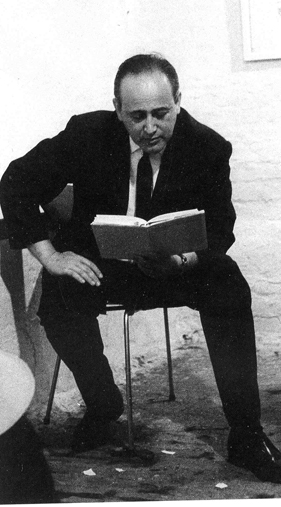
Zbigniew Herbert is….another Polish poet! The 20th Century is not Eliot’s, nor is it Auden’s, or Lowell’s, all three of whom made an immense intellectual effort to traverse and map our most violent and innovative century yet. In some sense they were not really at ground zero. They were historians, with the connotation that term has of distance and overview, of peripheral safety. Or maybe sometimes journalists, in a moderate democracy… The Poles, however, live in a country more ravaged and fought over back and forwards than any other, perhaps, at least in ‘the West’. Like Milosz, Zbigniew Herbert bears witness. His poetry has a moral function. We in ‘the West’ have an aversion to attributing any function to art, other than to shock, amuse, offer oblique commentary and generate money. But Zbigniew Herbert uses his poetry almost like a mass spectrometer, to break down and to analyse, to help make sense of his situation. He rejects the lyrical ego, that subjective ‘I’ that sits at the generative centre of so much western poetry, and which rests it’s truth telling function on notions of a subconscious that somehow equates to a deeper reality. He is different from Eliot, Auden and Lowell in his relationship to history and the literature of the past in that he is not a creator of worlds ransacking these disciplines for material. Instead, his outward perspective is a matter of survival, and his poems are the by-products of an ongoing need to make sense of his environment. To this end he has a character, Mr Cogito, an Alter Ego, who he deploys as a cartoon thinker. Like Descartes, he often starts from first principles, or none at all: this allows Mr Cogito access to the history and culture of European civilisation, without being tramelled by it, so his investigations are ideologically free. This makes his bafflements, and conclusions, or findings, eminently sane. Having said that, however, I am not going to select from the Cogito poems, but instead choose a poem famous as a statement of self-abnegating responsibility, a rebuke to romantic posturing.

[Why The Classics]

Posted in Poetry Anthology | Tagged: , , , , | Leave a Comment »

Compass, Borges

Posted by Eckhart's Dog Woof! Woof! on February 26, 2010

Compass. Jorge Luis Borges. I knew Borges as a short story writer before I discovered he wrote poetry also. His short stories are excersises in applied metaphysics: he often starts with an idea, an abstract one dealing with tenous entities or concepts, such as time, eternity, infinity, alternate grammars and philosophies, paradoxes and universal symbols. And then with almost mathematical rigour delineates a concrete world where these ideas and concepts exert a shaping power almost akin to fate. As if fate wore many masks, and was given over to playing games. His most famous short story is perhaps Tlon, Uqbar, Obis Tertius, which tells of an enormous enterprise undertaken by a secret society of scientists, philosophers, engineers, theologians, linguists, etc, to write a multi volume encyclopaedia of an imaginary planet, detailing its history, its peoples, differing cultures, languages, plants, animals, religions…The encyclopaedia is released gradually, and its seduction is such that its contents soon come to supplant reality itself, which is remade in the image of the encyclopaedia. Borges is fond of the conceit that reality is somewhere written. In a library we may not have access to, or which may be the universe itself in an unintelligble language. Unintelligible…to us. His poetry is likewise preoccupied with the ramifications of ideas, and I think he is at his best in a form which matched and answered to his need for precision: the sonnet. Artifacts and the figures of various craftsmen appear regularly in his poems, as if he himself acknowledged an affinity with these in his own poetic procedures. He’s like a watchmaker, but it is not simply time he wishes to record, but riddles, labyrinths, mirrors, days and eternity, the mystery of being. These are all intellectual puzzles that he tries to engineer into these marvellous devices in an attempt to observe their inner workings, perhaps to break their code. Very often, however, his sonnets end by indicating something beyond themselves, something supra-rational. It is a maneouvre that abdicates to a greater mystery, and one that he made more frequently with advancing years. I don’t think he would have agreed with Bertrand Russell, who asserted that the world is simply ‘brute fact’. Like Milosz, he craved a day of comprehension.
(Compass)

Posted in Poetry Anthology | Tagged: , | Leave a Comment »

And Owl, Foxhunt, Ted Hughes

Posted by Eckhart's Dog Woof! Woof! on February 23, 2010

tedhughes

Ted Hughes is responsible for introducing many of the major east European poets to a British audience via the journal, Modern Poetry in Translation, which he editted alongside Daniel Weissbort. Hughes translated many of these poets himself, with assistance from someone fluent in the original language. And in the process was exposed to trends outwith the Anglo-American and the Modernist traditions. Hughes’ attitude towards ‘literature’, as an established canon, a semiotic game or code the rules of which need to be learned, is one of wary ambivalence. He attended Cambridge on a scholarship, initially to study English, but afterwards changing to the study of Amthropology, having been warned by his ‘muse’ in a dream that his academic studies in literature were killing the centres of his own creativity. As Hughes recounts it, he fell asleep at his desk over an essay on a topic in English literature when, in his dream, the door to his room swung open and a figure with the head of a fox entered, and left a bloody hand (not paw) print impressed on his essay. ‘Stop this – you are destroying us’, the figure intoned, before turning to leave. Hughes took the hint, and changed his studies to Anthropology and Archaeology. He did not like literary or academic poetry, or the likes of which have been nurtered in academic houthouses. He preferred a poetry that engaged more directly with life. He described Shakespeare’s language, for example, as an emergency construct assembled out of any and all sources at his, Shakespeare’s, disposal, in the face of a spiritual crisis. It was not merely stage entertainment. Likewise he found in that generation of East European poets marked by World War 2 a sense of crisis that stripped their poetry of the inessential, and rendered literary embellishment and ornamentation vividly inadequate. Intially, Hughes engaged the natural world directly, and there are good grounds for arguing that he is the greatest nature poet in the English Language. But he was carried far beyond this initial starting point when he encountered the likes of Pilinsky, Holan, Popa. His mature style takes lessons learned from these poets, and fuses them with more primordial sources drawn from his studies in Antropolgy. And underlying all of this is a deep engagement with Shakespeare and an almost Elizabethan sense of the English Language as something not yet entirely settled into it’s groove but pressured by the need to improvise at a moment’s notice. Having said all this, it might be worthwhile quoting two of his poems, the first, ‘And Owl’, showing influences from the Eastern Europeans, and Anthropological sources in mythology and folktale, and the second, ‘Foxhunt’, an example of that ‘immediacy testing’ that he often subjected language to, to see if it was equal to the task.

Posted in Poetry Anthology | Tagged: , , , , | Leave a Comment »

Wolf Eyes, Vasko Popa

Posted by Eckhart's Dog Woof! Woof! on February 20, 2010

Vasko Popa was a Serbian poet born in 1922. He studied philosophy at Belgrade University, and at the universities of Bucharest, and Vienna. He was well-read in many subjects, including Alchemy and Serbian folklore. His poems often have the feel of primitive song, imbued with dream elements and folk symbolism. He learned from the Surealists, but surpassed them in depth of structure and in the deliberate cross-referencing and deep interconnectedness of his poems and their symbols and allusions. He wrote in sequences, and though each poem of his can stand alone, its real place is in the sequence, and each sequence is part of a greater organic whole. He didn’t just write poems: he produced a coordinated body of work. The danger in this enterprise would gave been obscurity, a semi-private code of cross referencing that would have discouraged entry into his work. Yet his poems are marvelously simple, open, and meaningful on a level that is direct, like folktale, or tribal song. Perhaps his greatest work is Earth Erect, which draws from Serbian history, and the life of Saint Sava, patron saint of Serbia. But I thought I’d choose from a volume called Raw Flesh, which takes as it’s foreground subject matter the here and now of the town of Vrsac, though its inhabitants cast longer shadows than normal. Wolf Eyes I like because of its quiet determination to be equal to whatever may come along, by drawing on deeper resources. It’s significant that Popa fought as a Partisan during World War 2, and was imprisoned for a while in Beckerek Prison.
(Wolf Eyed)

Posted in Poetry Anthology | Tagged: , , , | Leave a Comment »

Do Not Work Ahead, Paul Celan

Posted by Eckhart's Dog Woof! Woof! on February 19, 2010

Paul Celan…I doubt I’m up to the task of ‘explaining’ anything by Paul Celan. He was brought up in a German speaking Jewish family in Bukovina. Both of his parents died in forced labour camps during World War 2. He was multilingual, fluent in German, Romanian, French, and able also to speak Hebrew and understand Yiddish. But he regarded German as his mother Tongue, and it is in German that he wrote the vast majority of his poems. But German was also the language of the Nazis, and his relationship with the language was anything but simple. I defy anyone to give a definitive interpretation of any poem by Celan, and I suspect that he did not compose with a single end in view. Instead, I believe he composed within something like a charged field of possibilities, a third space equidistant between word and world where both could meet and refract meaning in new ways, the way light and image are refracted by the planes of a crystal. Housed within that crystal are the redemptive efforts of the German language to re-engage the world, after…well, after all the horrors perpetrated in the name of National Socialism. Hence the neologisms, the fractured syntax. His precisions are different from the simple fidelities of description. He rarely makes big statements. He rarely writes long rythmic lines, unbroken by caesuras and subclauses. Big statements and rythmic, rising crescendos are the stuff of speeches, and hadn’t the Germans had enough of speeches? Then there is his deep interest in Jewish mysticism, apophatic approaches to a God who would not intervene on behalf of His Chosen People in their darkest hour. And this, I think, highlights one of the most interesting features of modern poetry in the second half of the 20th Century, it’s often demonstrated refusal to simply walk away. Instead, it attempts to set up relationships with the unanswering void, as if even emptiness can be cultivated to yield meaning. Celan’s poetry may always be on the verge of silence, because of the ever greater need to listen.

(DO NOT WORK AHEAD)

Posted in Poetry Anthology | Leave a Comment »

Between, Vladimir Holan

Posted by Eckhart's Dog Woof! Woof! on February 19, 2010


Vladimir Holan. Holan is a Czech poet. I first came across his work in a box of books in a house on the shores of Belfast Lough. The house was owned by one of my English Lecturers. She had moved out, and myself and a few other students rented rooms. The box, a treasure trove, contained works by most of the major East European poets of the 20th Century. Many of them signed by their authors. I toyed with the idea of diverting some of these into my posession, but couldn’t convince myself that it would be somehow ok to do so. Geekily, I remember each book vividly. In fact, I remember more of them than I do of the degree I was supposed to be studying for. Holan was in there. Selections from ‘A Night With Hamlet’, his most famous long poem, and many of his shorter poems, for which he is best known. I know little about his personal life: he was a Catholic, left the church. joined the Communist Party, left the Communist Party, and rejoined the Church. A classic pattern. In his later years he lived in the centre of Prague, as a recluse. I don’t know enough about Czech literature to contextualise him within his native tradition. But he certainly appears to be different from other European poets of his generation. His shorter pieces engage in a kind of sorting, a zoom-lense attempt to discriminate amongst phenomena in order to uncover and frame the undefinable. When his shorter pieces are successful, he reveals something that you know cannot be made visible in any other way.
(Between)

Posted in Poetry Anthology | Leave a Comment »

To Robinson Jeffares, Ceslaw Milosz

Posted by Eckhart's Dog Woof! Woof! on February 19, 2010


Czeslaw Milosz is the greatest of the 20th Century Polish poets. Some regard him as the greatest 20th century poet, full stop. His greatness may not be immediately obvious, especially to those of us reliant on translations, though he has been well served in his translators, most of whom are poets of some substance themselves. At first reading, Milosz’s merits were not to me obvious, as I was in thrall to the subjective pyrotechnics of Plath and the punchy, close-up maneouverings of Robert Lowell. But I persisted. Something in me felt challenged by Milosz. He did not compose within a subjective, amoral bubble. He didn’t excuse himself or claim exemption from ordinary human obligations, including moral obligations, on artistic grounds. There’s nothing in Milosz that would appeal to a teenager, for example. When I started to commit to reading his body of work with a view to grasping it, it was a commitment to grow up. Milosz is a total subscriber to what he calls ‘the human experiment’, he doesn’t live in geological time, or pinpoint his co-ordinates within biology, he works from within human history, cultural-time, and refuses to relinquish ground to those who feel superior to others by virtue of their nihilistic viewpoint, a stepping outwith the human. His poetry is a constant search for meaning, and it encompasses the entirety of human civilisation. His mind is first class. He would have made a great philosopher. Or a great economist. Or historian, statesman, or even scientist. But he chose poetry, or, as he says, poetry chose him. And as fate would have it, he was set down on earth at the perfect point in place and time to record the course of the entire 20th Century, to bear witness to its most gigantic insanities: Facism, and so-called Communism. He hoped for ‘a day of comprehension’, an ultimate unveiling when the entire spectacle would at last make sense. A hope that has an eschatological dimension, but also a practical one: because he tried to realise it within his own limited lifetime and and as far as his limited powers would allow. It’s difficult to know what to select from his works, his poems are mostly large and ‘tend towards the condition of prose’, because he did not want to be exclusive. Otherwise, how could he ever hope to comprehend? I’ve chosen a poem from his previously unpublished works, witheld out of kindness, I think. It is a rebuke. It may be addressed to Robinson Jeffares, but at the time I read it, I took it personally.
(To Robinson Jeffares)

Posted in Poetry Anthology | Leave a Comment »

Poem 129, Osip Mandelstam

Posted by Eckhart's Dog Woof! Woof! on February 19, 2010

Mandelstam. Osip Emilievich Mandelstam was one of the great Russian poets of the early 20th Century. He stands alongside Boris Pasternak, Anna Akhmatova, and Marina Tsetayava, as part of that group of poets whose work responded to the Stalinist terror. There’s a famous story told about Mandelstam that reflects just how highly regarded poetry was in Russia during this time. Mandelstam had written a poem, ‘The Kremlin Mountaineer’, in which he calls Stalin a ‘Peasant Slayer’. He read this aloud at a literary gathering, popular in those days amongst the intelligentsia. Someone reported back to Stalin, and Mandelstam predictably was arrested. He was held in the infamous Lubiyanka, headquarters of the secret police, where he was intensively interrogated. It is said that Mandelstam was actually brought before Stalin himself to answer questions. In addition, while he was still in prison, Stalin phoned Pasternak to ask: is he, Mandelstam, a good poet? Stalin’s respect for poetry was such that Mandelstam was not killed, but released into internal exile, an ‘inner emigre’. He settled in Voronezh, a village outside Moscow, and there composed what have come to be known as the poems from the Voronezh Notebook. From this point onwards he experienced symptoms of mental illness. He lived in a state of nervous anxiety punctuated by bouts of paranoia, with at least one well attested suicide attempt. He must have known that the respect Stalin held towards poetry and poets would only preserve him for so long, that, sooner or later, his henchmen would return to finish the job. The most sensible thing would be to shut up, but Mandelstam suffered from what he called in one poem ‘nightingale fever’: an inability to stop singing. Furthermore, his poems of this time show a strong faith in the everyday and domestic, an awareness of the beauty of being at home in the world that is not diminished by the threat of mortality. He believed that poetry had a truth-telling function, and he accepted the fate that such an obligation entailed in times like his. The poem below reflects this. Written after the revolution had already turned sour, and after the first flush of his own literary fame, and youth, has passed, he predicts the inevitable, but eschews lamentation and tears.
Poem 129 (as numbered in the Collected Works)

Posted in Poetry Anthology | Leave a Comment »

Fable, Janos Pilinsky

Posted by Eckhart's Dog Woof! Woof! on February 19, 2010

Fable

Janos Pilinsky was a Hungarian poet. Born in Budapest in 1921, he was conscripted into the army during World War 2, and spent the last year of the war in various prison camps in Germany and Austria. This experience was definitive. A Catholic, a committed Catholic, what he experienced during the war and in these camps was something he subsequently wrestled with for the rest of his life. He could have chosen the easy route, become an atheist and walk away from his former commitments. But he didn’t, he stayed, and worked the emptiness, year after year. I’m not convinced he believed in a God, His existence, in any simple fashion, but I think he did not believe in his absence. When he confronted the emptiness, it was as a religious poet who never flinched from the biological evidence. The Incarnation and Redemptive Suffering would have been default templates to use to help make sense of the horror, yet he avoids both. How is it then that his poems can appear so luminous? Over and over again he returns to the scene of the crime, examines the evidence, and then examines it, examines it, and examines it…until it begins to shine, like a chalice, like a monstrance. But as the ‘fable’ below demonstrates, not everything that shines let’s you in.

(Fable)

Posted in Poetry Anthology | Leave a Comment »

To The Heart, Tadeusz Rozewicz

Posted by Eckhart's Dog Woof! Woof! on February 19, 2010

Tadeusz Rozewicz is of that generation of Polish poets who wrote their best work in the aftermath of World War 2, others of whom I’ll get round to mentioning. I like this poem because it echoes findings on the practicalities of evil that were published by Jay Lifton in his study of evil called The Nazi Doctors. The question Lifton addressed was, why and how did medical doctors take part in the Final Solution in the numbers they did? One of his conclusions was that they did so by constructing what he called an Auschwitz Self that treated morality as context dependant, relative, and that prioritised technical expertise above moral judgement. In this sense, a ‘good’ doctor was one who implemented the Final Solution with efficiency. Rosewicz predates Lifton’s work, but this poem zeroes in on that psychological state that allows a man to perform evil whilst still still laying claim to prestige. But just because a man is good at doing something doesn’t mean he is a good man, nor does a narrow focus on technicalities excuse one from wider moral responsibilities. The title is ironic, and not.

(To The Heart)

Posted in Poetry Anthology | Leave a Comment »